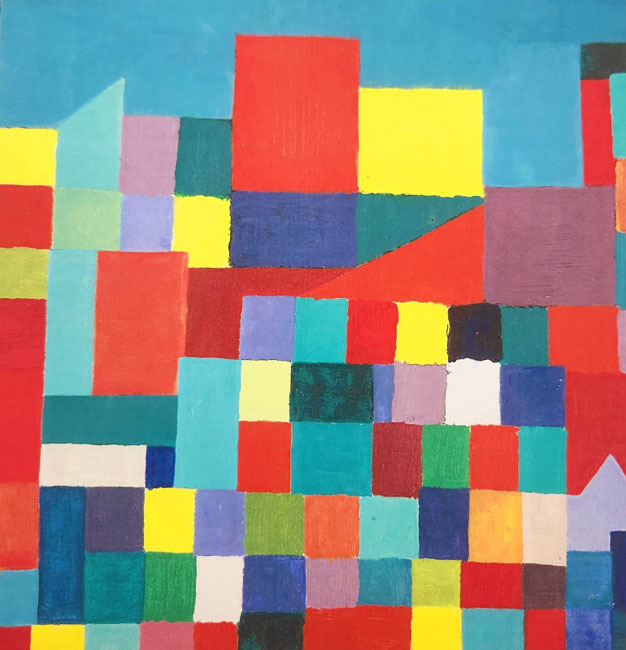
New York City, 1987
Counting the cars on the New Jersey Turnpike
They’ve all come to look for America
All come to look for America
–Simon & Garfunkel, America, 1968
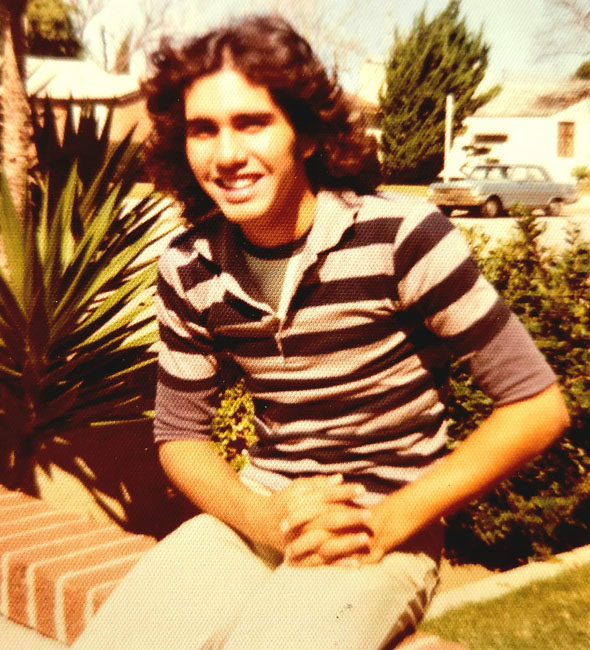
Me, getting ready to hit the road from West LA to New York City, Age 16.
1976 was an epic year. It not only involved a consequential presidential election cycle, but it also marked the nation’s bicentennial–the 200 year anniversary of our Declaration of Independence from British rule. All of this had important implications for American democracy. It was a time for a welcome opening to new political and cultural possibilities, especially for younger Americans like me, who were coming of age and hoping to contribute to a more inclusive and harmonious way of governing our national and international affairs. So, during that year, I renewed my focus on politics and politically-focused art–especially in light of the recent major realignment taking shape following the long-overdue conclusion of the Vietnam War in 1975 and the fallout of the Watergate scandal resulting in former U.S. president Richard Nixon’s resignation in 1974.
After the tumult of the prior decade, America was badly in need of a new kind of leadership, and I wanted to play some kind of role in helping to advance change. All around me, across the Greater Los Angeles Area where I lived, there were important emerging artists–many of them young Latinos and Latinas, who were using the arts to challenge the established order of things and to lift up new possibilities. These included leading creators like Gronk, Patssi Valdez, Harry Gamboa, Jr., and Judy Baca, as well as leading community and public art centers like East Los Angeles-based Self-Help Graphics. Through guerilla and community art projects, alternative film productions, street performances, and muralism, visionary artists and creative communities like these inspired me to think about committing my artistic impulses to more purposeful work intended to make a decided statement about the need for a new and better way forward.
Though I was only 16 years old at the time, I was unusually ambitious and purposeful in every aspect of my life, in every pursuit, and in every moment that offered a worthy teaching about how to make the world a better and kinder place. As I dug deeper into my evolving conscience about the kind of politically- and progressively-leaning art I wanted to begin producing, I increasingly felt I had to expand my horizons by getting out into the world extending beyond even Los Angeles’ robust art scene. Inevitably, I began to gravitate to the idea that I needed to find my way to New York City, which then stood alone as the center of the modern art world in the United States. I knew that New York-based artists like Andy Warhol, Robert Rauschenberg, and Faith Ringgold were producing important new bodies of art which spoke to the contradictions, violence, and conspicuous consumption which increasingly defined American culture. I badly wanted to explore the product and thinking of such artists.
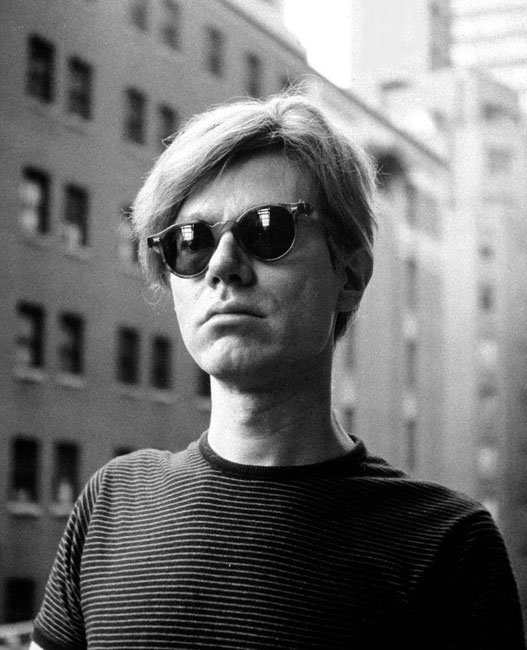
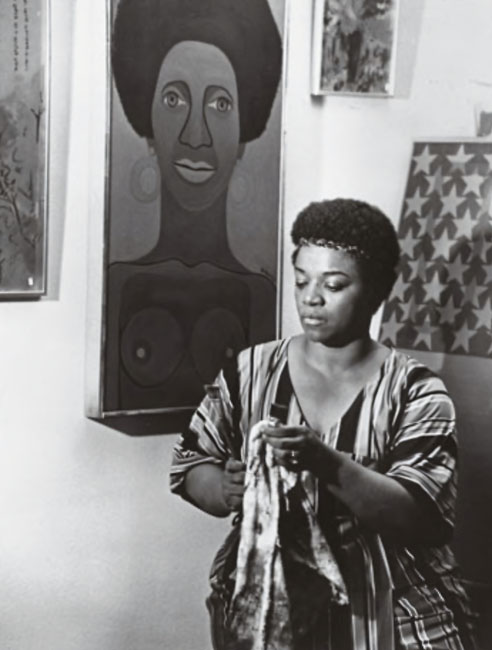
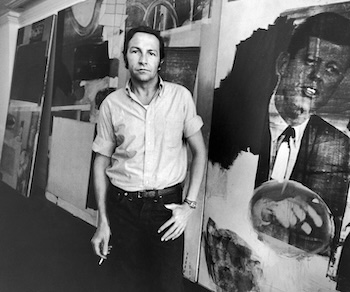
Andy Warhol, Faith Ringgold, and Robert Rauschenberg, New York City, 1960s.
Accordingly, as I was beginning to think about college, I started to ponder a possible undergraduate education at NYU or Columbia University. I requested and received application catalogs from both schools, and I began to get very excited about the prospect of living and studying in the Big City. At the same time, my evolving dreams were tempered by the realization I had no real present pathway to get to New York–especially at my still-young age, in order to check out those schools in advance of applying for admission there and to assess for myself whether my dreams might actually be grounded in a sufficient degree of reality to fully commit myself to such an arc of energy and possibility. Little did I know then how much my fantasy-rooted impulses to strive in said direction were about to be met by an unexpected opportunity to experience New York much sooner and far more spectacularly than I ever could have imagined.
In the Spring, as our West Los Angeles University High School student body closed out the school year, I began to hang out a lot with my varsity basketball team buddy Matt Barenfeld and my childhood friend Will Amato, whose father Sam Amato was a leading member of the UCLA art faculty. We all loved the robust music scene of the day, and in order to make the most of it we would spend hours together up in Will’s attic bedroom, where he and his brother Stephen had amassed a remarkable collection of the era’s best rock music in a vast library of LPs. The three of us would talk endlessly, smoke a little marijuana, and listen for hours on end to our favorite riffs on the Amato brothers’ hi-fi. We covered an amazing terrain of musical offerings, from Fleetwood Mac, Neil Young, and Leon Russell to The Doobie Brothers, David Bowie, and War. We laughed about everything we could think of and we dreamed about what the future to come might portend.
In early June, on one of these wayward occasions, Matt, who was a year ahead of me and Will in school, shared with us that he had decided to drive across the country to visit his mother on Long Island, where he had spent his childhood. He planned to visit there for the Summer, immediately following his graduation in just a couple of weeks. Matt had recently purchased a crazy cool, aqua-colored 1969 Chevy Malibu, and he wanted to see the country with it on his way back to his original home over several weeks of cruising the highways. Will and I were both deeply intrigued and suddenly jealous about the prospect of missing out on Matt’s great adventure. We immediately started considering all the fun we could have rolling across the nation together in Matt’s cherry ride. Indeed, his Malibu was one of the coolest cars in our social mix at school. Matt’s Malibu had a super sleek look and leather interior, as well as an amazing sound system for blasting radio and cassette tape music. Everywhere Matt went, his ride turned heads.
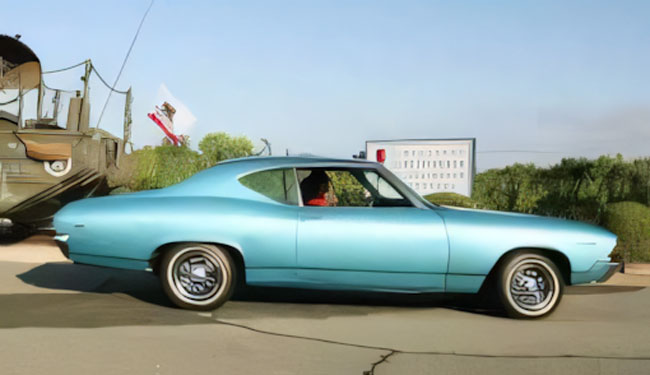
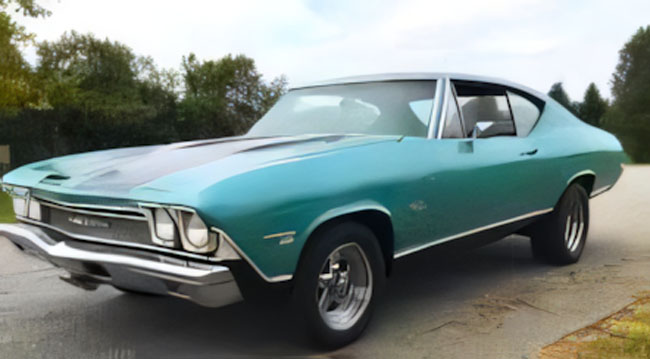
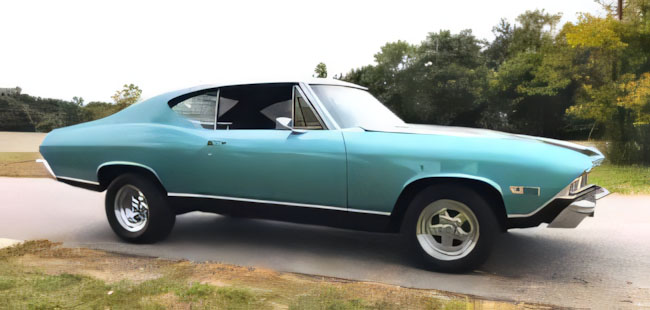
After a few more groovy songs and some additional tokes of marijuana, we began to turn our fantasy talk into concrete plans. We envisioned a route which would take us from Los Angeles to Seattle, WA in the Pacific Northwest, and then turn us from there to parts east through Idaho, Montana and the Dakotas, then through the sprawling Midwest, and concluding with a final leg across Pennsylvania and the New Jersey Turnpike before landing in New York City, just in time for the big July 4 bicentennial celebration. The big challenge was getting our parents to agree to support our ‘Highway to Heaven’ conspiracy. Will’s parents could only abide him joining in for the ride up the Pacific Coast to Seattle. I knew from the bottom of my heart my mother would never abide me participating in any part of the enterprise. So, in what remains the most ethically-dubious, but ultimately validating decision I ever made in my life, I simply did not tell her about our plans. Rather, I quietly slipped away with Matt and Will in the early morning hours of June 15, when we shoved off from my West Los Angeles driveway to hit the road.
When I finally called my mom from the Bay Area to tell her what was up, she literally flipped out. But I assured her I had packed well, saved enough money, and was in good company with my pals. After a lot of screaming at me and lamentations, knowing there was little she could do by that point, my mom began to offer up a lot of protective advice about the do’s and don’t of the road. We agreed to talk by phone every few days. And then she did a lot of praying with my grandmother to ensure that I would be spiritually protected by all the guardian angels she imagined it would take to keep me and my friends out of harm’s way. And, in retrospect, I am most grateful she activated every ounce of divine intervention she could on my behalf, because our trip across country during that bicentennial year was action-packed with adventure. We smoked a lot of pot, hit bars everywhere which never bothered to age-check our IDs, picked up hitchhikers, squatted in places from graveyards to rural ranchlands for our overnight sleeping arrangements, and blasted our tunes at top volume and top speed as we raced across the vast vistas of America. It was amazing!
Sadly, in Seattle, we had to say goodbye to Will, so he could honor the agreement with his parents to abort the mission before we headed due east towards New York. We put him on a Greyhound bus, and then Matt and I raged on. We blasted through Montana and the Dakotas, stopping for a semi-pro baseball game in Billings and hitting Mount Rushmore along the way. In South Chicago and Detroit, we saw some of the most poverty-stricken and racially-segregated places in North America–places which were so shockingly deteriorated and underserved they made me wonder if we were still actually in the United States. Through Ohio and Pennsylvania, we travelled for seemingly hundreds of miles at a time without barely even passing any major structures.
By the time we got to New Jersey, it was July 3 and we could feel the excitement of what lay just ahead of us in every bone of our bodies. Matt told me about his cousin Mike, who was in his early twenties and lived on Manhattan’s Upper West Side. He informed me that Mike would be putting us up in his apartment for a couple of days while we got oriented in advance of making our way out to Matt’s Mom’s place in Old Westbury, Long Island, where we’d be spending the rest of the Summer. It was all good! Travelling along the New Jersey Turnpike, heading towards New York City, we threw a Simon and Garfunkel cassette tape into Matt’s car system player and we played and replayed their cut entitled “America.” It was the perfect soundtrack for the moment. The entire experience was surreal and beyond even the heights I anticipated when we embarked on our magical mystery tour nearly three weeks earlier. And then we arrived…
On Saturday evening, July 3, 1976, just before midnight, Matt and I found our way over the George Washington Bridge, crossing into upper Manhattan’s Washington Heights. The traffic was heavy as we turned off the Bridge and made our way over to the Broadway exit at 178th Street. Once we made our way onto Broadway heading downtown, the bicentennial party was on. The traffic was bumper to bumper. Car horns were blaring. Loud music was everywhere. People were on the sidewalks all around us dancing, connecting in laughter and frivolity of all kinds. By the thousands, as far as the eye could see all down Broadway, every tall building’s windows were full of New Yorkers shouting festive thoughts to anyone who would listen on the street below. The level of happiness and celebration surpassed even my wildest expectations. It was already everything and more that I had wanted to experience in New York.
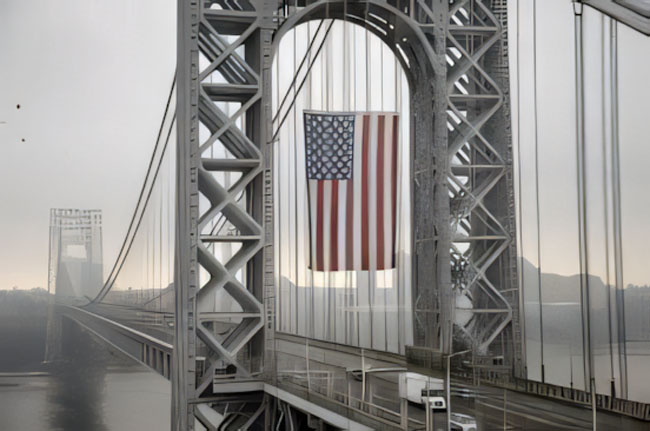
The George Washington Bridge Overpass from New Jersey to Upper Manhattan
By about 12:45AM, we made it over to Matt’s cousin Mike’s place on West 78th Street and Columbus Avenue. Mike met us at his front door with a beer and welcomed us in with great cheer. His girlfriend and a couple of friends were also there and we all got quickly introduced. Before we knew it, we were in the groove with our new crew, drinking beers and smoking herb. The music of the day offered the perfect soundtrack for our celebration and laughter: Elton John’s and Kiki Dee’s “Don’t Go Breaking My Heart,” Gary Wright’s “Dreamweaver,” The Four Seasons’ “Oh What a Night,” and others.
I especially remember when the Chicago tune, “Saturday in the Park” came up, we all stopped the conversation and harmonized the song’s timely lines:
Saturday in the park
I think it was the Fourth of July
Saturday in the park
I think it was the Fourth of July
People dancing, people laughing
A man selling ice cream
Singing Italian songs
And, then, we all broke out in big hoots and laughs and drank another beer. It was the perfect introduction to the Big City.
We all agreed to call it a night at about 2:00AM, so we could get some sleep before the big day coming up in the morning, when New York City was planning to host its biggest party since VE Day in 1945. Mike let me and Matt have the front room sofa and floor to crash on with our sleeping bags and once the lights went out we were quickly asleep. When we woke up in the morning at about 10:00AM, we could smell coffee and breakfast aromas flowing from Mike’s kitchen. He and his girlfriend had made us some delicious eggs, bacon, and toast, and some welcome coffee to shake off our cobwebs. After enjoying our meal and a happy recount of our fun prior evening, Mike suggested we gather with a couple of friends near West 72nd Street and Broadway, and then head downtown to Battery Park at the southern tip of Manhattan. That’s where we would be able to see all the tall colonial era ships and flotillas assembled in New York Harbor and catch the big fireworks show over the Statue of Liberty. So, after a quick shower and shave, that’s what we set out to do.
Already, when we left Mike’s apartment at around 11:30AM, we could see the streets all around us filling up. As we walked down Columbus Avenue, the crowd was already considerable. When we got to West 72nd Street, we picked up Mike’s friends–the same guys we’d had such a good time with the night before. We buzzed their doorbell and as we waited for them to come down to meet us on the street from their upper floor apartment, Mike pointed me and Matt towards Central Park West and told us that was where the great former Beatle John Lennon lived with his wife Yoko Ono, in a building called The Dakota. Lennon was an epic hero to me and I was immediately in awe. When Mike’s friends finally made their way down, we all turned West to head over to Broadway, just a short distance away. When we got there at around Noon, the bicentennial celebration became even more real for me.
Broadway was packed with wall to wall humanity. The City’s main thoroughfare for auto transport had been closed to traffic for the day; and people of every ilk were taking advantage, walking the streets. There was a lot of great music at every turn, street performers, food vendors selling hot dogs, salted pretzels, and sandwiches. There were families, couples, and friends celebrating all along our way downtown. Among other things, I noticed a relatively limited police presence–only an occasional cluster of cops on a given corner or a team of two or three policemen on horses. But in every case, the police on duty were also celebrating the occasion with an air of pride. They were engaging happily and positively with the plethora of exuberant street walkers like us. There were virtually no incidents of violence to speak of in Manhattan that entire day. On the contrary, it was just one, big, veritable love fest.
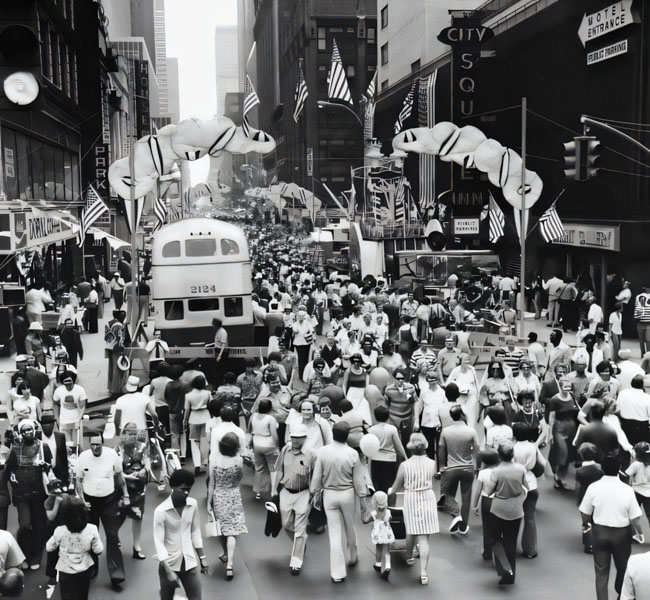
NYC’s Bicentennial celebration on Broadway, July 4, 1976
(Photo by PeterKeegan/Keystone/Hulton Archive, Getty Images).
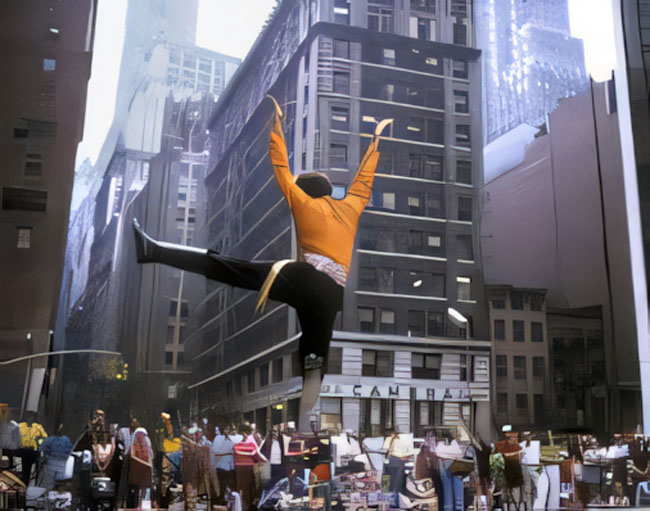
July 4, 1976 New York City Street Celebration (History Collection).
As we made our way down to midtown Manhattan, in the 50s, I marveled at the skyscrapers all around me. I had come of age in Los Angeles as it was growing by leaps and bounds, and elevating in status to the nation’s second most populous city. Our skyline and surrounding clusters of high rises, extending from Downtown to The Miracle Mile on Wilshire Boulevard to Century City and, then, to Westwood and Santa Monica were formidable and impressive. But Manhattan’s endless skyline of tall buildings dwarfed anything we had back home on the Coast. This was an informative and humbling observation. It put my life scale in immediate perspective. It made me realize, even notwithstanding the significance of my beloved City of Angels, there was a place which was even larger and more important in the grand scheme of things.
At about 2:00PM, we reached Times Square at 42nd Street. This was the hallowed ground that gave rise to the great Broadway novel and movie of the 1930s, “42nd Street.” This was center of gravity for the V-E Day celebrations of 1945. This was where virtually every New York Yankees World Series victory celebration had taken place. I saw the big, world famous Coca Cola and Sony signs on the tall buildings above me. They were the very images of New York I would often see projected in the movies or on television. I was out of my mind with amazement and inspiration, taking it all in. We found a street vendor with especially tasty looking hot dogs and salted pretzels, and we all bought and wolfed down a couple of each with a tall beer. It was delicious and to me somewhat exotic.
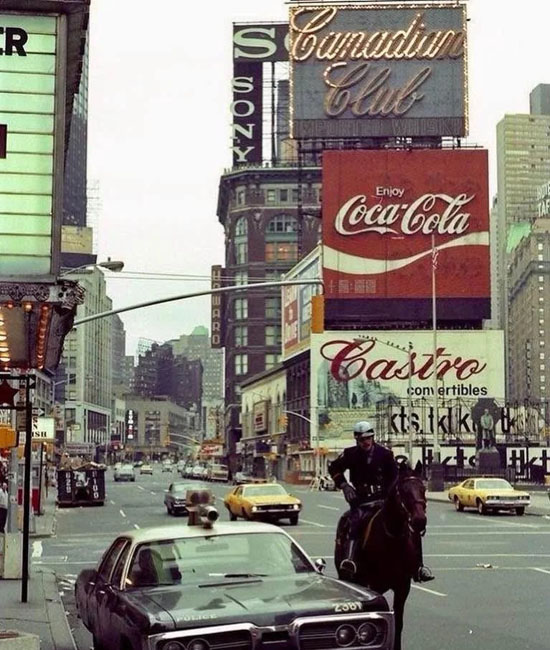
Coca Cola sign at New York City Times Square, 1976 (NYC History).
The weather was not as hot as normal for an early July day on the East Coast, only about 85 degrees Fahrenheit; but, I noticed immediately it was much more humid in NYC than the Summers I had grown up with on the West Coast. Gratefully, I was wearing all-white clothes that day: a white v-neck T-shirt, baggy white bell bottom jeans, and a pair of white Nike sneakers with white sweat socks. The relatively breezy ensemble spared me a lot of discomfort for sure, because, we had only just begun our trek down to Lower Manhattan and we had already covered about 2.5 miles of ground, with at least as much ahead of us before getting down to Little Italy, the next stop on our journey towards New York Harbor.
Along the way, we cruised past Union Square, New York University, and Washington Square. At Houston, we veered East and made our way to Mulberry Street. From there, we cruised down towards Broome Street, the doorway to Little Italy. The whole look and feel of Little Italy was amazing to me. The smell of Pizza at every corner, the experience of New York City as it must have felt like being there in the late 19th or early 20th centuries when the Big Apple was teaming with new Italian immigrants. It all conjured close and familiar associations with my own early influences growing up in a Catholic- and immigrant-dominant culture. All of these aspects of Lower Manhattan made a strong impression on me. Later in the afternoon, in Little Italy, I bought and ate my first ever Gelato. I loved every bit of it!
We cruised further downtown through the festive and colorful Chinatown District, to Columbus Park, where we hung out in the neighborhood for about an hour. We milled about and talked with people, then found an open spot in the park where we all sat down to guzzle back some bottled water we had bought from one of the many nearby street vendors, to battle dehydration. We marveled at all we had already seen during the day and speculated with anticipation and excitement about what would come next as we forged ahead towards the culminating events of our journey–seeing the tall ships in New York Harbor and checking out the big planned fireworks show over the Statue of Liberty and Ellis Island.
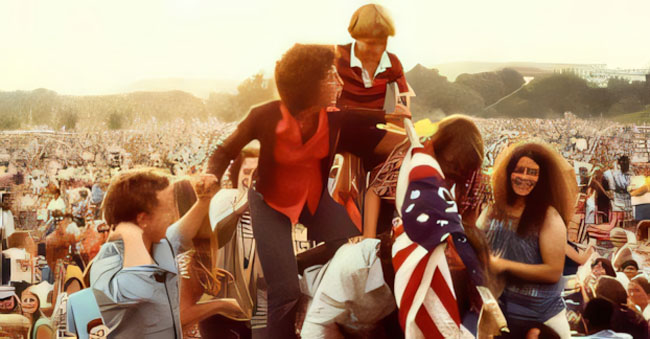
People of all races, shapes, and persuasions were out on the streets of NewYork City on that most special day in 1976.
From Columbus Park, we made our way back west a few blocks over to City Hall Park, which eventually took us back onto Broadway. The City Hall and its adjacent Manhattan Municipal Building were impressive old structures which matched up with my understanding of New York City’s Gotham allegories–based on the Batman comics and television shows with which I had become familiar as a child. The large edifices looked dark and daunting to me in the late afternoon sun. They suggested strong hints of bureaucracy, corruption, and anachronism in my young mind’s eye.
I was just then beginning to anticipate the impending arrival at our ultimate destination, Battery Park, when I turned to my right and got my first real look at, and sense of, the utter massiveness of the original World Trade Center complex. Located just West of us, The Twin Towers at the Trade Center were beyond my wildest expectations in their scope and scale. They were easily the tallest buildings I had ever seen; and in their modernity and sleekness they were a total contrast to New York’s City Hall and the Manhattan Municipal Building. To me, the Towers represented a much more forward-leaning, rather than backward-looking city–one that was intent to maintain its status as the center of the universe in modern times.
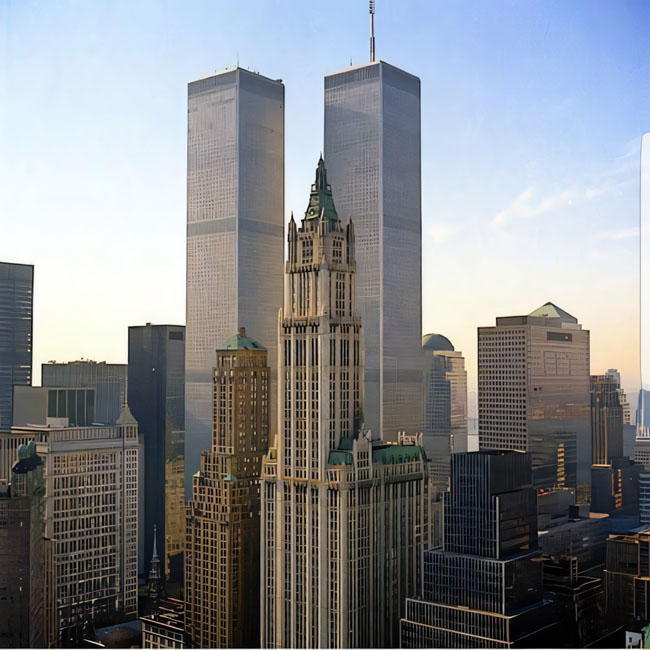
Downtown New York City skyline with original World Trade Center Towers
(Tim Thompson)
We trekked further down Broadway and made it to Battery Park by about 6:00PM. When we got there, it was packed with onlookers and crowd-staging in anticipation of the planned bicentennial fireworks show to come later in the evening. In some locations, there were many rows of pre-paid, parade-style seating which were already beginning to fill up fully three hours before showtime. People elsewhere around the Park were beginning to jostle for viewing space and positioning to see the tall ships at New York Harbor–harkening back to the nation’s early formation, along with a massive battery of more modern sail boats lining the horizon leading out to Ellis Island and the Statue of Liberty. It was an amazing sight and spectacle. To use the vernacular of the time: I was ‘blown away’ to be on hand for all of it!
All along the surrounding water banks, people from across the City and the world were assembling to join in on the celebration. Further down the way, thousands upon thousands of onlookers were tightly assembled on barges docked along the harborside, to get a gander at the festivities. Many of the participants came in large groups and had brought along supporting gear, some of it quite elaborate, ranging from lawn chairs and umbrellas to portable ice boxes and small grills. Our little posse was relatively outnumbered and under-resourced. But our sheer excitement and enthusiasm just to be a part of it all powered us forward.
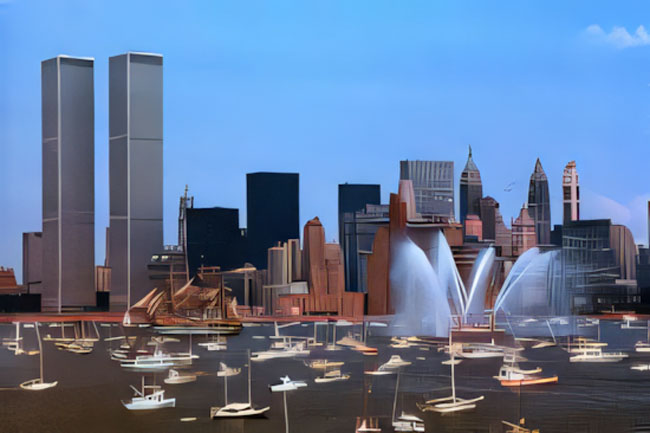
Scene of New York Harbor, July 4, 1976
(photo by Photo by Steven Lindner)
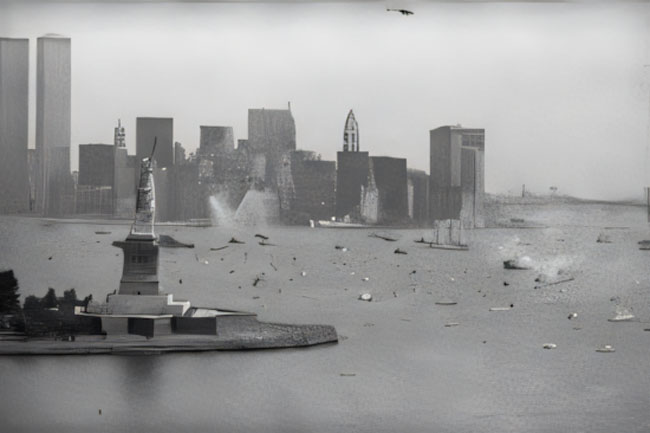
The Statue of Liberty and New York Harbor, July 4, 1976
(Photo: Ray Stubblebine/AP).
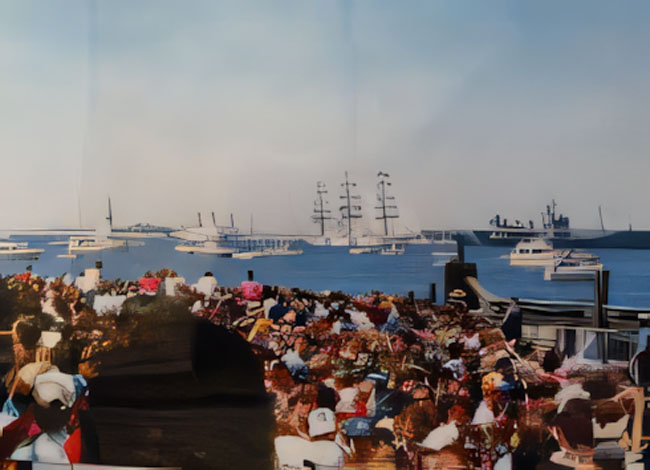
Scenes of New York Harbor and Battery Park, New York City, July 4, 1976
(Patrick A. Smith; New York City History and Memories; South Street Seaport Museum).
Once we got ourselves oriented to the landscape, we decided our best bet would be to get ourselves down towards the waterfront just on the other side of City Pier. From our visual assessment of the scene, we felt that location would offer us more space as well as superior viewing options. So, we headed down towards the water and further west from our point of entry at the Park. Sure enough, when we got there, we lucked into a nice little spot near the water with a great view of the entire Harbor. Especially visible to us was the Statue of Liberty. Seeing the Statue for the first time up close was riveting, but also somewhat different than what I had imagined it would be like. In the first instance, its greenish color surprised me. I thought Lady Liberty was white or granite-colored. Second, compared to everything else I had seen in NYC for the first time, which all seemed larger than life, the Statute was actually far more diminutive than I had expected it to be.
Nevertheless, the grandeur and inspiration of Lady Liberty could not be denied. She commanded a certain reverence and respect for all she represented. Her placement at the entry of Ellis Island, where so many millions of immigrants to America had made their start, was powerful in its symbolism, especially to this grandson of immigrants. While my grandparents came to the U.S. over the nation’s southern border with México, I nevertheless easily related to the stories of the people and families that had found their way to our shores through the portals of Ellis Island; and I could easily imagine all the expectation and wonder that must have filled their minds and their hearts when they first landed in New York Harbor with the Statue and her mighty flame being their first sign of welcome.
When night finally fell, the anticipation reached a pitch. The surrounding hundreds of thousands of onlookers began to cheer and sing, to laugh louder and louder, and to whistle. At 9:00PM, the first volleys of the fireworks show commenced. And we and everyone else around us, indeed the entirety of Lower Manhattan, just went wild. Each successive explosion in the night sky exceeded the last. The whole thing was just breathtaking and pride-inspiring. At the height of the festivities, me and my basketball buddy Matt looked at each other with massive smiles and we gave each other a huge hug of congratulations. We had invented a dream together in Will Amato’s attic bedroom in West Los Angeles nearly a month earlier, we had saved and sacrificed and driven across the broad expanse of North America. And, now, we were living our dream in all of its glory in New York Harbor on the 200th anniversary of our nation’s birth. It felt like the accomplishment of a lifetime. And in so many ways, for me, it was.
We made our way home that night at about Midnight using the subway to get from Battery Park to the Upper West Side, so we could spend another night at Mike’s place. It was my first ever subway ride. I remember the stations being dirty and chock full of graffiti. Every subway car and every stop was just packed with people; and the noise of the people’s chatter and of the breaking trains and their engines was considerable, constant, and exciting. It was a most fitting and forever memorable way to end what I knew already then would be one of the most significant and meaningful 24 hours of my life.
In the following days, I got my first taste of more normal New York City life, hanging out with Matt and his cousin Mike’s crowd on the Upper West Side. I found myself thinking a lot about the hit Broadway show and movie ‘West Side Story,’ and I ate a lot of slices of pizza and spent a considerable amount of time strolling through Central Park and along major corridors, like West 72nd Street. Every moment brought forward a new first for me in what would establish a long and loving relationship between me and New York City during the years to come. It seemed like it was easy to find my natural comfort zone in the Big City. Even despite so many things about it being different from the life I knew so well back home in Los Angeles, I somehow felt very much at home in New York.
Perhaps the biggest take away from my maiden voyage to the Big Apple was my sense that, even despite the vast number of things which distinguished America’s many diverse population groups, and notwithstanding the inevitable tensions those differences created, there was something happening in our nation at that time which was ultimately geared to bringing us closer together and making us stronger as a people. Above all, the vast majority of the nation’s people in that moment seemed to be facing the future with a deep sense and sincere hope we could do and be better by building a more inclusive economy, politics, and culture. In this connection, the experience of being in New York for the first time made me feel even more strongly that one of the essential ingredients of our forward-going success as a multicultural society was the power of art and allied forms of human expression to bring us further together. Because in the New York City of the mid-1970s, potent and wholly new forms of cultural expression were taking hold, and they were electric and exciting.
Aside from the great museums, galleries, music halls, and fashion that New York City obviously produced at scale, it was the art and the voice of the people which most encouraged me about our prospects for a better future. It was the robust graffiti bombing that adorned the city’s subway lines and buildings, the emerging voice of rap and hip hop, and the dynamic development of break dancing which gave me greatest hope. All of these dynamic new forms of street culture struck me as most healthy and welcome contributions to American democracy and quality of life. They were raw, they were original, and they were honest and compelling. The power of these creative new genres heavily influenced both my own evolving artistic point of view, as well as my sense of optimism about the nation’s future to come.
Sadly, as it turned out, though, notwithstanding the undeniable contributions of these newfound forms of popular expression to American civic culture–or perhaps because of them–fate would not ultimately bring forward the more unified America I envisioned being inevitable in those vital years of the mid-1970s. Instead, as our nation celebrates its 250th birthday now five decades later, it is a far more fractured, broken, and disunited land than it was when I landed in New York City all those years ago to celebrate the bicentennial. Our nation certainly had major problems and divisions back in the 1970s–no one can deny that: deindustrialization; white resistance to racial integration in neighborhoods and schools; racially-slanted police brutality; barriers to social equality for people of color, women, LGBTQ people, disability populations, and so on. These realities were all alive and well back in the day too. But, as bad as those problems were, they paled in comparison to the darkness we are contending with today: ever-expansive militarism, even more vast and growing racial disparities in wealth and income; mass incarceration and systemic dehumanization in so many aspects of modern policing; growing incidences of public violence and suicide; the most rancorous political culture of my lifetime; official censorship of free expression in education and the arts; and outright state-sanctioned efforts to discourage voting and representation for all.
With all of that to consider, can we even say today with a straight face we remain a democracy in 2026? With deep sadness and regret, I would argue: probably not. As we approach the 250th anniversary of our nation’s founding, therefore, I cannot help but feel a sobering disinclination to honor and revere where we situate today. Over recent months, as I have completed my soon to be published memoir, “Riverbed Reflections of the Dreaming Horse” (Arte Público Press, University of Houston, 2026), I have had the opportunity to revisit and reflect on now nearly five decades of being active in the public square as a political economist, social investment leader, public education advocate, writer, artist, and activist. Our nation has never been perfect; but, in all of my years of life, I have never seen our country more lost.
Even in the worst years of the 1960s and 1970s (and those were some very challenging years indeed), there remained an abiding spirit of possibility for change and in the decades that followed, real progress was made. We ended the ridiculous war in Vietnam. We purposefully expanded racial justice and women’s, LGBTQ, and disability rights, as well as economic opportunities for the poor. We made major investments in environmental protection, and in educational equity for historically-excluded people of color. Political power was slowly but surely shifted in favor of the disenfranchised. Hip Hop music, break dancing, and graffiti art played important roles in defining the landscape for needed change in each of these respects.
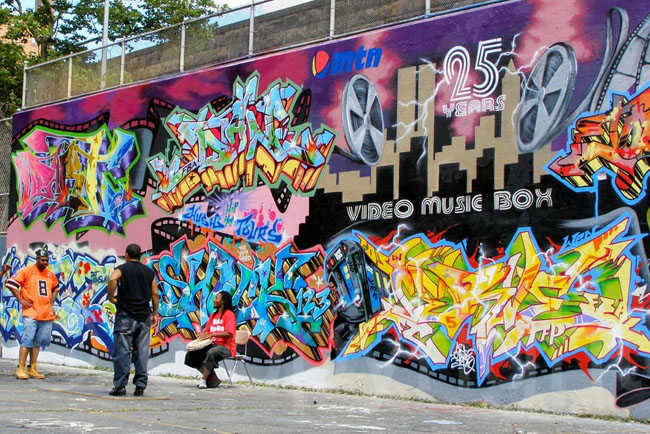
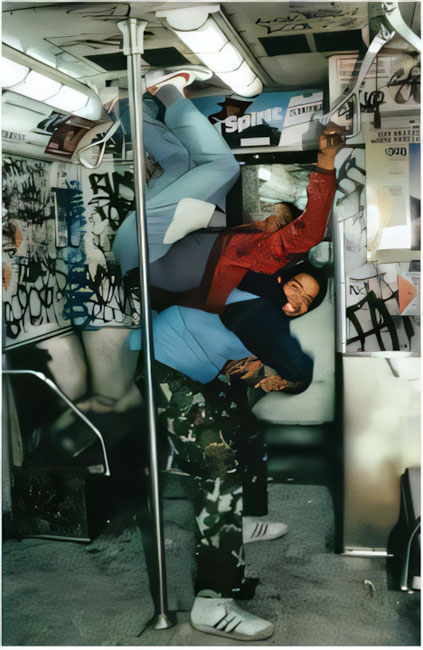
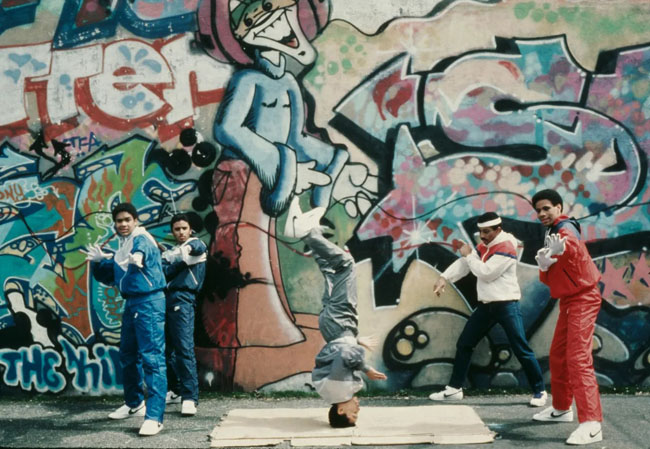
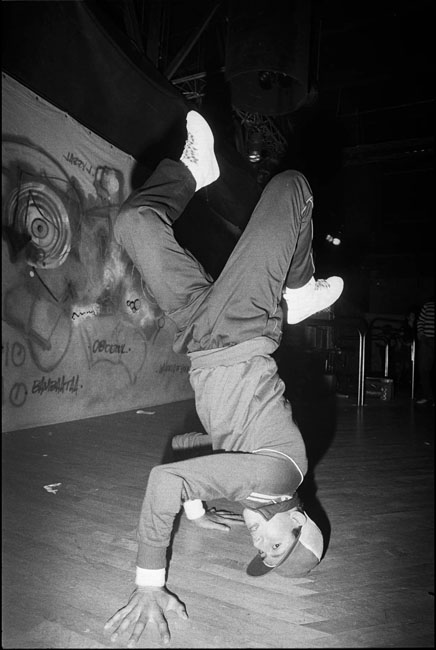
East Harlem graffiti and street life live on in New York City.
A lot of this was reflected in the dynamic celebrations which marked the bicentennial of half a century ago. But since those times, greed, vanity, institutional othering, misguided foreign adventures, and disunity have defined the American journey. It is hard to feel good about where our nation stands as of this writing. That said, the American people are, in the main, good, caring, and naturally hopeful. The best of us remain warriors for justice and the Common Good. But our systems, our institutions, and our leaders have let us down. It is time for a second American revolution–a peaceful but powerful rejection of the path we have been on.
In the next stage chapters of our national journey, I believe it will be vital for artists and creatives in every field of expression–and especially our young people who have been the most directly and negatively affected by recent trends, to take a leading role in helping us reach a far more inclusive, healthy, and enlightened destination for the future ahead. Through their vision, courage, and innovation, I believe there is great promise to right our wayward ship. Indeed, I believe the arts and youth culture are likely to be the only pathways to achieve the course corrections we require to save our democracy and to save our souls.
So, these are my hopes and prayers for the years to come: that the best of our nation–and especially our youth and our artists–will join hands to lift up a new and better way forward– a way that more properly serves the best and truest values of our nation and the planet. May this better future begin now. May it help to heal our increasingly unwell world. And may God Bless America in ways that enable our nation to forestall and reverse its accelerating moral decline.
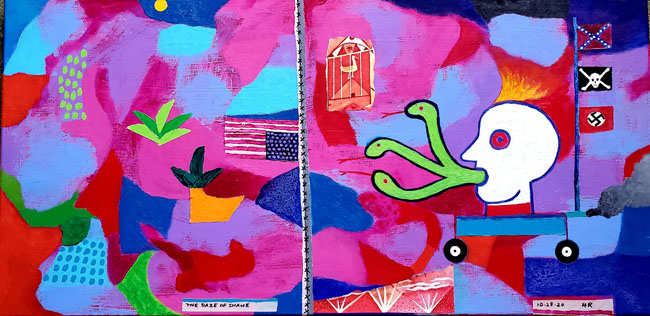
Daze of Shame, 2020